TL;DR
Struggling with a cramped room? Small space design is not about squeezing in more, but achieving visual clarity, spatial flow, and decision confidence. This guide explains how to use light, strategic furniture, vertical storage, and real-world planning to make your home feel larger—without costly renovations or guesswork.
Why Do Small Spaces Feel So Small?
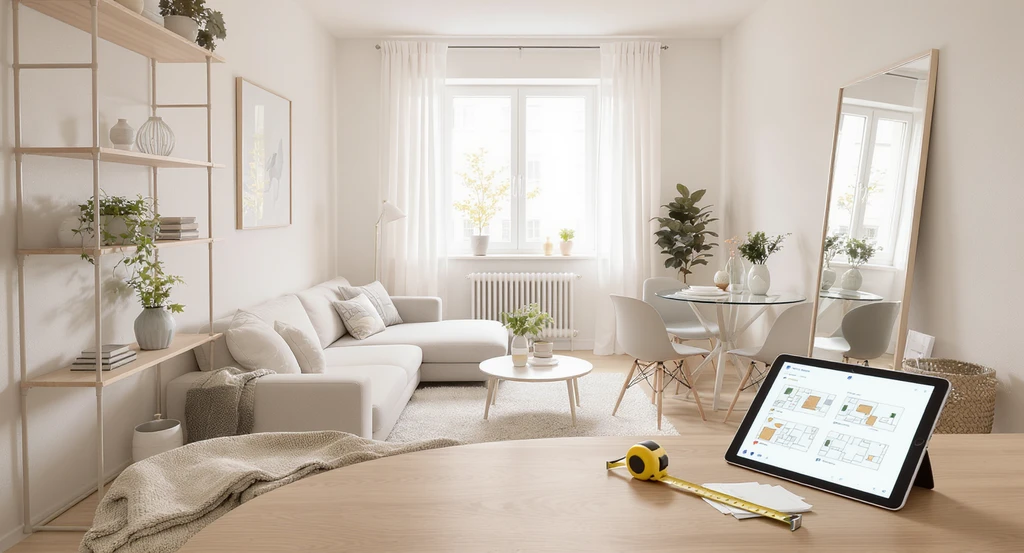
Overcoming the visualization gap: this compact living room uses mirrors, natural light, and visualization tools to show aphantasia-friendly strategies for maximizing small spaces.
Living in a small home or apartment can feel limiting—but it doesn’t have to. Some of the world’s most inviting interiors are crafted within compact bedrooms, studio apartments, and narrow living rooms. The difference rarely comes down to square footage alone. Instead, thoughtful design choices, visual planning, and honest self-assessment create comfort and openness. Yet, most homeowners struggle to confidently envision how their spaces could look or function. The main reason? The visualization gap. This disconnect between what we see, what we feel, and what we ultimately decide leads to hesitation and costly mistakes. If you’ve ever avoided rearranging a tight living room or regretted a bulky storage purchase, you’re not alone. This guide offers grounded, decision-grade small space design solutions—so your home feels bigger, calmer, and more functional, all through conscious choices rather than expensive makeovers.
-
Direct Answer: How Can You Make a Small Room Feel Bigger?
Small rooms feel larger when lighting, layout, storage, and visual planning work together with intent. The key is to visualize solutions before acting: use warm neutral colors, opt for multifunctional or leggy furniture, add vertical storage, and reduce clutter. This approach minimizes costly mistakes, enhances decision clarity, and creates openness without renovation.
Expert Insight
A client once fretted over fitting a work-from-home area into her small city apartment, convinced there was no space. Using visualization tools, we explored wall-mounted desks, vertical shelves, and moved her sofa just six inches—suddenly, the entire room felt more open, and she gained a productive zone without sacrificing comfort.
-
Why Small Space Design Matters—Beyond Square Footage
Increasingly, compact homes and urban apartments are the norm for homeowners, buyers, and renters. The true challenge isn’t just limited space: it’s the inability to visualize how design choices change function and comfort. Common emotional hurdles include hesitation, fear of regret, and decision fatigue. When you can’t see how a sofa will actually fit or whether new storage will block light, it’s easy to delay or overcompensate. This negatively impacts listing performance, everyday enjoyment, and even buyer engagement—people disconnect if spaces read as cramped or confusingly arranged. What people see triggers what they feel. And what they feel directly shapes what they decide, both in purchase decisions and day-to-day living.
-
Understanding the Visualization Gap
Visualization gaps create anxiety in small space design—especially when rooms are empty or poorly staged. The lack of visual context means most homeowners cannot fully imagine how color, light, furniture, and storage interact in the real world. That’s why so many spaces end up over-furnished, under-lit, or frustrating to use. Visualization systems, such as REimagineHome, offer a practical fix. These platforms allow you to preview furniture placement, lighting shifts, and functional layouts before investing time or money. Instead of guessing, you can evaluate scenarios, bringing mental clarity and higher confidence to your decisions. The ultimate impact? Lower risk, less regret, and more satisfying results.
-
How to Make a Small Space Feel Bigger: 5 Core Moves
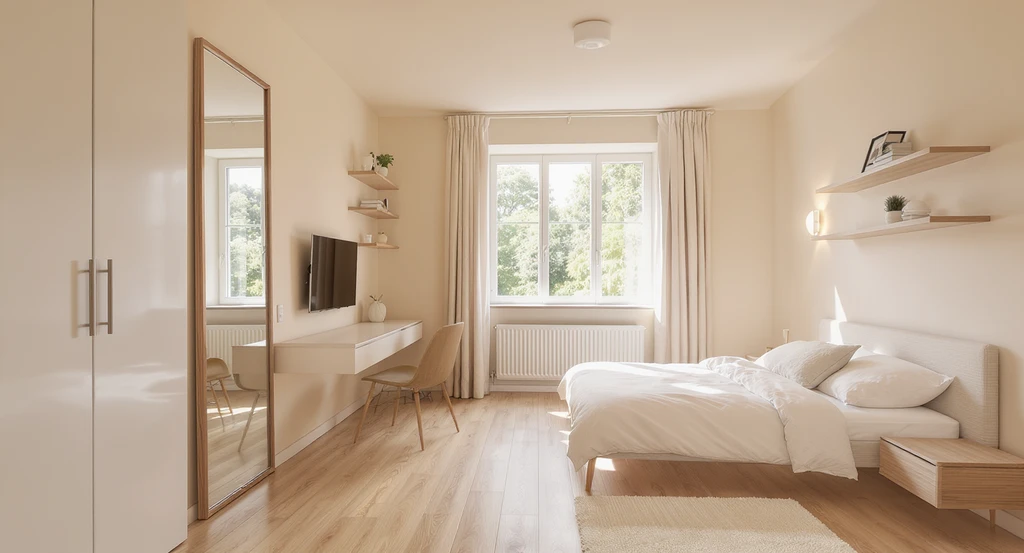
A bright small space with multi-functional furniture, layered lighting, floating shelves, and large mirrors—a visualized example of interior design tips for making compact rooms feel bigger, even with limited imagination or the visualization gap.
- Use Light Reflection to Your Advantage: Warm neutrals, large mirrors opposite windows, and layered lighting make rooms feel brighter and larger. Avoid stark whites; instead, opt for harmonious light shades that create gentle depth. Learn more in our coastal bedroom design guide on using color and light effectively.
- Prioritize Multi-Functional, Uncluttered Furniture: Freestanding pieces with visible legs, storage beds, wall-mounted desks, and nesting tables are space-saving and keep the layout open. This approach also aligns with the calm clarity central to minimalist bedroom design.
- Go Vertical, Not Horizontal: Maximize wall space with floating shelves, tall storage units, hanging organizers, and wall sconces. This opens up movement on the floor and draws the eye upward, expanding perceived height.
- Maintain Visual Flow: Use consistent flooring, similar color tones for walls and ceilings, and limit high-contrast decor. This trick ensures your eye travels smoothly through the room, making the space feel expansive—an idea also vital in Japandi-inspired homes.
- Layer and Localize Lighting: Combining ceiling, wall, and accent lighting creates a sense of depth and warmth—a critical factor in small rooms that often feel flat with only one overhead light source.
-
A Practical Framework: The Small Room Decision Loop
- Measure for Movement: Before buying or moving furniture, ensure walking paths between doors, windows, and major functions remain unobstructed. Even visually, tight passageways create psychological stress.
- Edit and Sequence: Remove unnecessary decor, choose one clear focal point (like a large piece of art instead of small frames), and reduce both physical and visual interruptions.
- Integrate Storage Smartly: Opt for concealed storage (beds with drawers, lift-top coffee tables, bench seating) to declutter surfaces without sacrificing style. Use closed cabinets instead of open shelving when clutter control is a challenge.
- Visualize Before Purchase: Use visualization tools, mood boards, or digital staging to preview potential layouts. It’s often less about inspiration, more about certainty before committing cash or effort.
-
Real-World Constraints—And How to Make Peace With Them
Not every design solution is possible for every home. Urban apartments may have tiny windows, uneven floors, or strict storage limitations dictated by ZIP code and building age. Many retail furniture options won’t fit through narrow doors, and custom solutions can add cost and delay. Product lead times may derail fast turnarounds, and even ideal furniture could feel out of place due to natural light or wall constraints. The most reliable approach is to start with flexible, low-investment upgrades—mirror placement, layout optimizations, floating storage—while carefully planning any big purchases. Budget-friendly, operational shifts (small lighting upgrades or color adjustments) usually yield better ROI than full-scale renovations.
-
Mistakes to Avoid in Small Space Design
- Bulky, heavy furniture that eats into movement space
- Blocking natural light with tall or opaque storage
- Busy, high-contrast color palettes that chop up visual flow
- Piling up decorative objects to "fill" emptiness
- Not syncing storage needs with daily habits (resulting in recurring clutter)
- Neglecting proper lighting, resulting in dark, unwelcoming rooms
-
Small Space Solutions for Every Room Type
- Bedrooms: Use wall-mounted reading lights, under-bed storage, vertical headboards, and sliding wardrobe doors. Minimal layers and soft textiles boost calmness—a principle explored in our practical minimalist bedroom guide.
- Living Rooms: Anchor the room with one large rug instead of several small ones, opt for floating or glass tables, and incorporate layered lighting and plants for biophilic balance. One oversized artwork calms the room better than multiple small pieces, as seen in Japandi design principles.
- Kitchens: Install vertical spice racks, use magnetic knife strips, under-cabinet lighting, and floating shelves. Slim appliances and reflective backsplashes improve both function and openness.
- Baths & Entryways: Rely on wall hooks, floating vanities, and mirrored cabinets. Keep colors light, and surfaces visually clear.
-
Styldod as a Visual Decision Layer
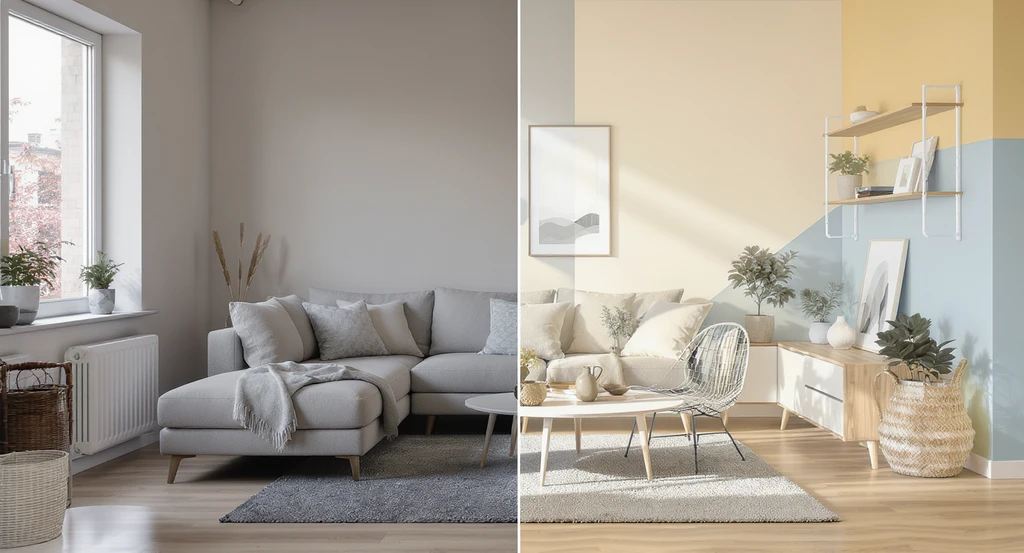
A digital visualization tool overlays new furniture layouts and color schemes onto a small living room, illustrating aphantasia-friendly interior design tips for homeowners who can’t easily visualize changes, and providing one of the best tools for bridging the visualization gap in compact spaces.
Styldod’s REimagineHome feature acts as a visual planning layer, simulating designs and layouts in realistic home contexts. This helps owners see how color, furniture, and storage interact before purchasing—the antidote to decision fatigue and regret. On a larger scale, Styldod’s Smart Media Module supports real estate professionals in building scalable, compliant listing media pipelines. This transforms media workflows from creative afterthoughts into robust operational systems—ensuring visual trust, audit-ready compliance, and clear communication of a room’s true potential.
-
Compliance, Trust, and Realistic Visual Integrity
Modern listing media, especially for small homes and apartments, must do more than just look good—it must build trust. Responsible visualization means no misleading proportions or unrealistic transformations. MLS-ready visuals, transparent disclosure, and careful image editing combine to provide clarity and compliance, supporting not just quick sales but long-term credibility for all stakeholders.
Visualization Scenario
Imagine walking into a narrow living room with blank white walls and scattered, small rugs. The space feels cold, fragmented, and uninviting. Now—layer in a large textured rug, install a warm LED lamp in the corner, add a mirror opposite the window, and use a mid-century sofa with exposed legs. Instantly, the room feels cohesive, airy, and open—without a single renovation.
Frequently Asked Questions
- How can I make a small room look bigger without renovation?
Enhance light flow, limit clutter, use vertical storage, and opt for multifunctional furniture. Layout improvement usually provides more noticeable gains than structural changes. - Why do small rooms feel overwhelming?
Limited space amplifies the effects of clutter, blocked light, and poor movement flow. Large or mismatched items create psychological stress and reduce comfort. - What is the visualization gap in small-space design?
The visualization gap occurs when a homeowner can't mentally picture how a completed room will look or work. This leads to indecision and hesitation. - How does visual planning improve buyer psychology?
Buyers who can clearly imagine themselves in a space are more emotionally engaged and likely to see a listing as valuable. Good visuals boost trust and listing performance. - Are mirrors and light colors always the answer?
They help, but only when combined with layout, storage, and lighting that fit the real constraints of your space and lifestyle. - What role does Styldod play in small space visualization?
Styldod’s REimagineHome enables realistic previews of small rooms, helping owners and agents make better choices, minimize regret, and improve listing quality. - How important is listing media for small homes?
Clear, consistent listing media demonstrates potential, drives engagement, and boosts confidence. It’s especially critical for smaller or visually challenging properties.
Small Spaces, Smarter Decisions
Small space design is a matter of visual intelligence, operational practicality, and human-centered planning. When you use light, layering, and intentional storage, your rooms support better daily living and higher listing performance. Reducing the visualization gap is key—before you buy, move, or renovate. Tailor your approach to your home’s real constraints and focus on calm, clear decisions. Remember: an open, comfortable room isn’t about cramming in more; it’s about aligning visual planning with how you genuinely want to live. Visual clarity drives smarter outcomes—start there, and let every next decision flow naturally.