TL;DR
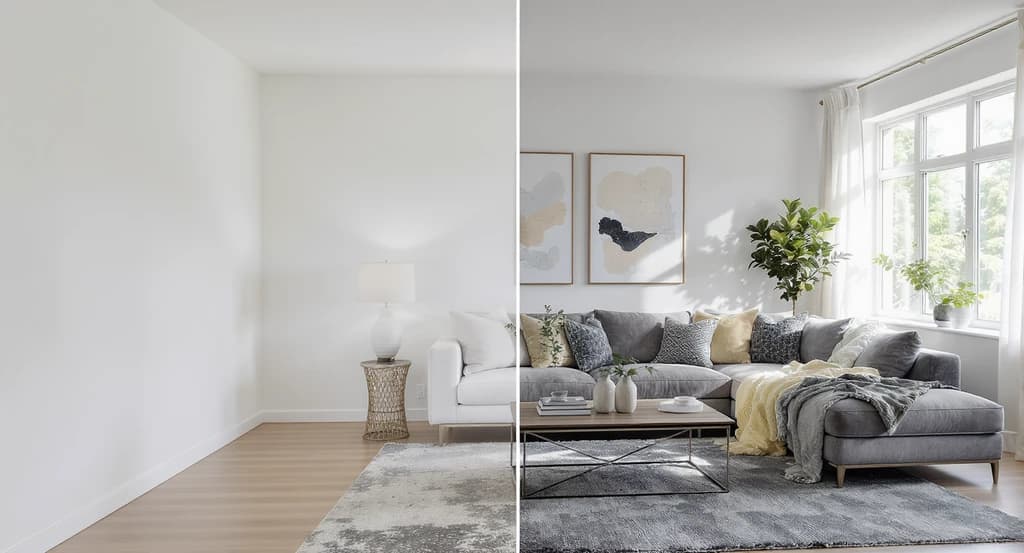
Virtual staging uses digital technology to add furniture and décor to photos of empty spaces, helping real estate agents, homeowners, and developers showcase properties online. It offers a cost-effective, flexible alternative to traditional staging—dramatically improving online listing appeal and helping buyers visualize the potential of a home.
What Is Virtual Staging?
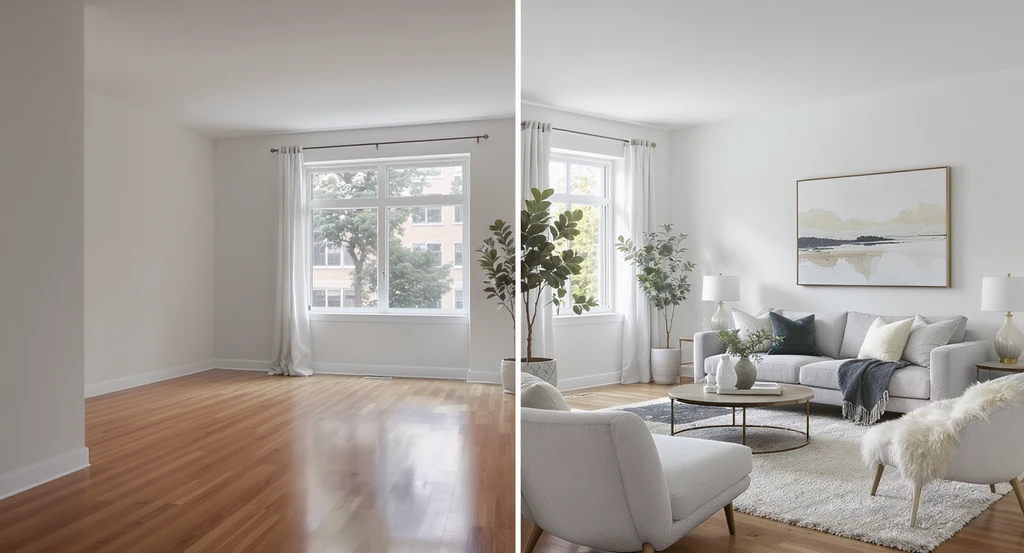
Virtual staging vs traditional home staging cost: this side-by-side living room shows the benefits of virtual staging for realtors, illustrating how the process can increase sale price and enhance property presentations step by step.
Virtual staging in real estate refers to the digital enhancement of property photos by adding photorealistic, computer-generated furniture and décor. This technique helps agents and sellers present vacant or under-furnished spaces in their best light, attracting more buyer interest. In the real estate industry, virtual staging boosts listing engagement, helps properties stand out online, and can accelerate sales—all at a fraction of the cost and complexity of physical staging.
-
Why Realistic Virtual Staging Matters in Real Estate
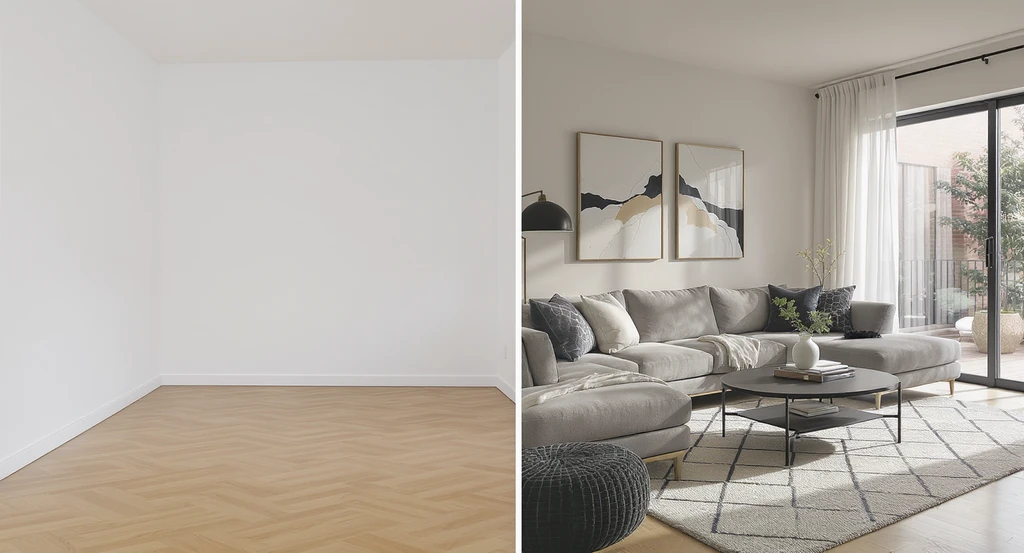
A split-screen living room highlights how virtual staging increases sale price, visually demonstrating the benefits of virtual staging for realtors and sellers.
The majority of homebuyers over 90%-begin their search online, and 85% say listing photos are the most critical factor in their decision-making process. However, empty rooms or poorly staged spaces can appear cold, uninviting, or confusing in photos, making it hard for buyers to imagine living there. This challenge can dramatically reduce listing engagement and lead to missed sale opportunities. Well-executed, photorealistic virtual staging, on the other hand, provides context, helps buyers emotionally connect with a property, and can drive more showings and quicker sales.
-
How Virtual Staging Works: Step-by-Step
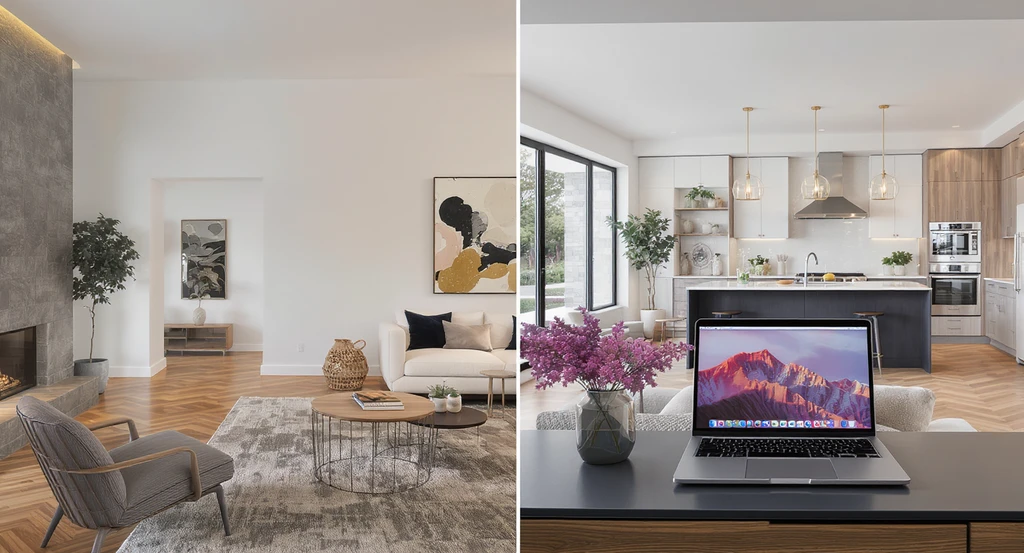
Virtual staging vs traditional home staging cost: see the step-by-step process as unfurnished rooms are digitally transformed, highlighting the benefits of virtual staging for realtors and how this approach increases sale price in key areas like living rooms and kitchens.
- Photo Capture: Start by photographing vacant or sparsely furnished rooms using professional real estate photography best practices—and ideally with clear, neutral backgrounds.
- Photo Selection: Choose which room photos require virtual staging (commonly living rooms, master bedrooms, and kitchens).
- Staging Consultation: Discuss design style, target buyer, and preferred aesthetics with a virtual staging provider; select furnishing and décor options from a digital library or custom portfolio.
- Digital Enhancement: Skilled designers use specialized software to overlay photorealistic furniture, rugs, lighting, and décor onto the photos. The goal: create believable, inviting scenes that match current design trends.
- Quality Review & Delivery: The finished images are reviewed for accuracy, realism, and compliance with MLS/photo guidelines, then delivered in high-resolution formats for use in online listings, print, and marketing materials.
-
Virtual vs. Traditional Staging: Key Comparisons
- Cost: Physical staging can run $2,000–$5,000+ per home. Virtual staging averages $30–$70 per image or several hundred dollars for a whole house.
- Speed: Virtual staging is typically completed in 1–3 business days. Traditional staging may take weeks to schedule, execute, and remove.
- Flexibility: Virtual allows sellers to experiment with multiple styles, layouts, and color palettes—ideal for appealing to different buyer demographics or marketing eclectic spaces.
- Impact: Both methods can drive higher sale prices and reduce days on market, but virtual staging is uniquely effective for online-driven home sales.
Tradeoff: Virtual staging only enhances photos, whereas traditional staging also impacts in-person showings. Some agents use a hybrid approach—digital enhancement for online listings, and light physical staging for showings.
-
Practical Guidance: Best Uses and Key Tips
When to Use Virtual Staging:
- Selling vacant homes or rentals
- On a limited marketing/staging budget
- When the owner is living in the home and full staging isn’t practical
- Marketing homes with eclectic layouts or needing design updates
When to Avoid/Be Cautious:
- Don’t use virtual staging to misrepresent space size/layout
- If the local MLS restricts or requires disclosures for digitally altered images
Best Practices:
- Opt for clean, high-res photos with minimal clutter before ordering
- Always disclose virtually staged images to buyers per ethical/MLS guidelines
- Match décor and style to the local market and anticipated buyer profile
Common Mistakes:
- Over-designing or adding unrealistic, oversized furniture
- Poorly rendered images that don’t match the photo lighting or proportions
- Failing to update furnishing libraries to reflect current trends
- Not disclosing virtual staging when required
- Editing out permanent flaws (e.g., holes, structural damage) without disclosure
-
Styldod Perspective: Virtual Staging in the Styldod Ecosystem
Virtual staging sits at the core of Styldod’s visual decision layer for real estate. With platforms like REimagineHome, agents and sellers can experiment with different furnishing styles before committing—letting them tailor the look to appeal to target buyers. The Smart Media Module helps agents manage all listing media, including virtually staged images, ensuring a seamless workflow. Styldod’s expert visual services guarantee that every staged photo is photorealistic, on-trend, and compliant—helping clients stand out in a crowded digital marketplace. By integrating virtual staging with other visual marketing tools, Styldod supports agents, developers, and homeowners in making faster, smarter listing decisions.
-
Common Virtual Staging Mistakes to Avoid
- Ignoring compliance: Not following MLS or legal disclosure rules about digitally altered photos.
- Lack of realism: Using furniture or décor that looks fake, misaligned, or out-of-proportion defeats the purpose.
- Skipping photo prep: Cluttered or poorly lit original photos make even the best staging look bad.
- Disregarding design trends: Outdated or mismatched virtual décor can make spaces less appealing.
- Misleading edits: Hiding permanent flaws (holes, damage) can erode buyer trust.
- Inconsistent use: Mixing virtual and physical staging styles without a plan can confuse buyers.
Virtual Staging FAQs
- Is virtual staging allowed on MLS listings?
Yes, but most MLSs require disclosure that images have been digitally enhanced. Always check local rules. - How much does virtual staging cost?
Virtual staging typically costs $30–$70 per image, or a few hundred dollars for a full property—far less than traditional staging. - What if I don’t like the staged photos?
Most providers offer revision rounds; communicate design preferences clearly in advance for best results. - Does virtual staging only work for vacant homes?
No, virtual staging can also supplement occupied homes to reduce clutter or visualize potential layout changes. - How long does virtual staging take?
Standard turnaround is 1–3 days after photo submission, depending on scope and complexity. - Can virtual staging help outdoor spaces?
Yes, many services can virtually stage patios, decks, and backyards in addition to interiors. - What rooms benefit most from virtual staging?
Living rooms, bedrooms, and kitchens are the highest-impact rooms for virtual staging, according to buyer surveys and NAR research.
Conclusion: Better Visuals, Better Outcomes
Virtual staging is transforming the way homes are marketed-making it easier, faster, and more cost-effective to present properties at their highest potential. By leveraging photorealistic visuals that connect emotionally with buyers online, real estate professionals can increase listing engagement, reduce days on market, and achieve stronger sales results. As part of an integrated visual marketing strategy, virtual staging is a vital tool for any modern real estate agent or seller.