.jpeg&w=96&q=75)
TL;DR
The visualization gap—the disconnect between listing photos and a buyer’s ability to imagine living in a space—directly drags down listing performance. Leveraging home visualization, design decision tools, and strong media operations is now essential to boost engagement, speed sales, and earn buyer trust.
What Is the Visualization Gap in Real Estate?

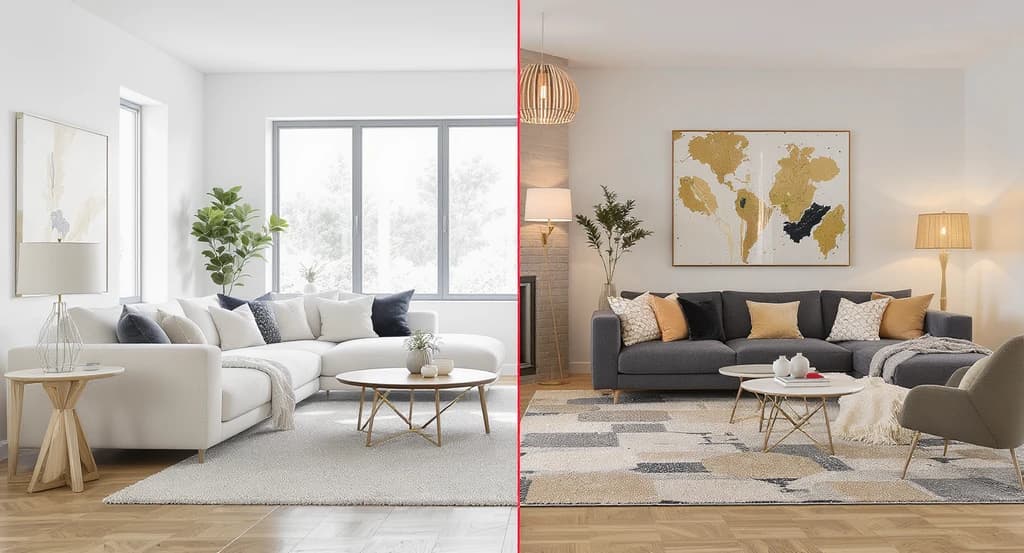
This editorial-quality split-view image highlights the visualization gap in real estate listings, showing how staging and home visualization tools directly influence buyer decisions and first impressions by making properties easier to imagine as a future home.
The visualization gap is the breakdown between what buyers see in listing photos and what they can imagine as a future home. This gap arises when listing visuals lack context, clarity, or cues that help viewers project themselves into the space—resulting in fewer clicks, lower engagement, and slower sales. Research confirms over 80% of buyers find property easier to envision when it's staged, proving that home visualization and visual planning tools aren’t simply "nice to have"—they’re foundational for listing performance.
-
Why This Matters
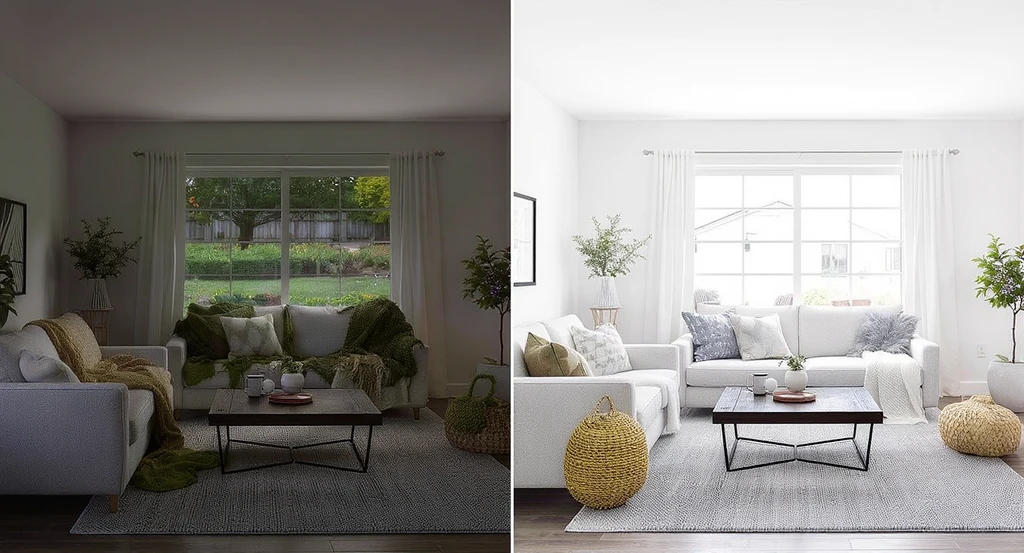
This comparison highlights the visualization gap in real estate listings, showing how photo angles and effective staging influence buyer decisions and listing engagement.
Today’s buyers spend just seconds making listing decisions online. With a crowded real estate market, the visualization gap becomes a critical barrier. When listing visuals fail to support spatial decision making, buyers hesitate, scroll past, or move on entirely. This means property marketing visuals aren’t just a first impression—they’re the front line of conversion and engagement. Bridging this gap directly influences listing performance: higher engagement, stronger offers, and faster transactions.
Expert Insight
An agent in Austin shared how her empty condo sat for weeks with low engagement. After applying Styldod’s Virtual Staging and home visualization, inquiries doubled within days—and the unit sold over asking within a month.
-
How the Visualization Gap Happens
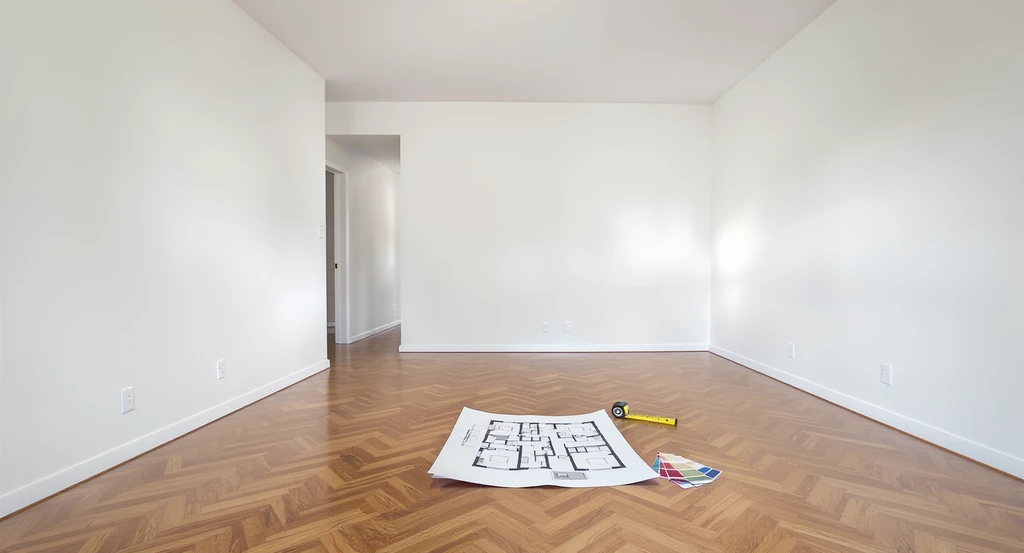
An unfurnished space with only a floorplan and visualization tools shows how the visualization gap in real estate listings increases buyer hesitation and confusion.
- Lack of Context: Empty or poorly presented photos give no cues about scale, layout, or usability—even though these details matter most to buyers.
- Spatial Decision Struggle: Most buyers aren’t trained in reading floorplans or envisioning renovations. Without design decision tools, confusion, hesitation, and decision fatigue follow.
- Cognitive Load: Buyers crave visual clarity. The more mental effort a listing takes, the lower the listing engagement and inquiry rates.
-
Defining Core Concepts: Styldod’s Visual Decision Layer
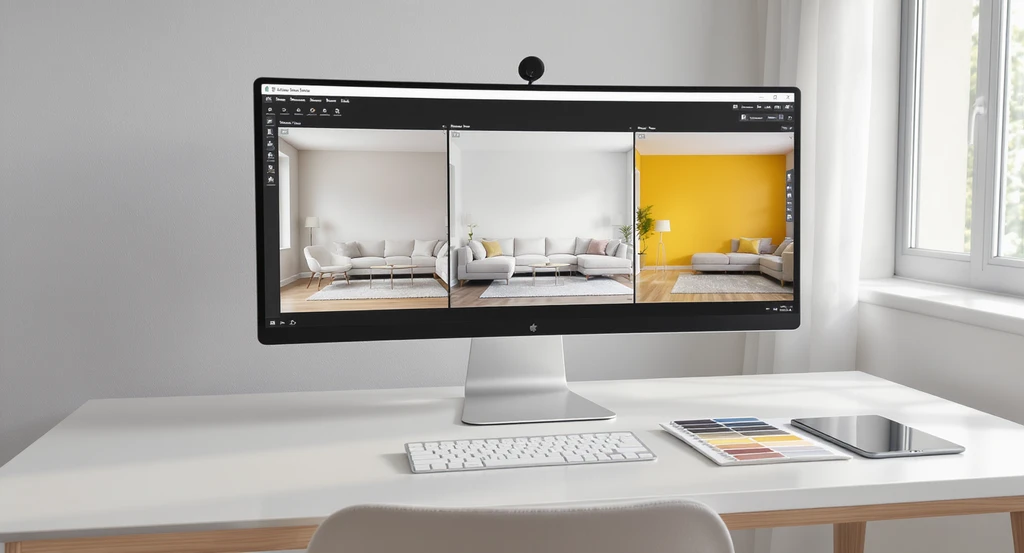
A professional workspace with a Visual Decision Canvas highlights how staging, renovation tools, and layout previews address the visualization gap in real estate listings, showcasing the best tools for home visualization and the impact of digital staging on buyer decisions.
Styldod defines the visualization gap as a breakdown in home visualization and design decision tools, where buyers can’t convert listing visuals into confident actions. This is why we developed the Visual Decision Layer: a system combining home visualization, renovation visualization, and spatial decision making tools. Central to this is the Visual Decision Canvas—a workspace empowering agents and homeowners to test layouts, stage digitally, and assess renovation potential before making costly moves. This moves listings from static images to a true decision-ready experience.
-
Real-World Outcomes: Listing Performance and Buyer Engagement
- Reduced Listing Performance: Listings lacking home visualization support see fewer clicks and lower inquiry rates—a direct hit to listing performance.
- Lower Buyer Engagement: Buyers who can't "see themselves" in a property simply don’t shortlist or inquire, weakening property marketing visuals' effectiveness.
- Slower Sales & Lower Offers: Staged and visually optimized homes move quickly and typically attract stronger offers, as they tap into visual buyer psychology.
-
How to Close the Visualization Gap
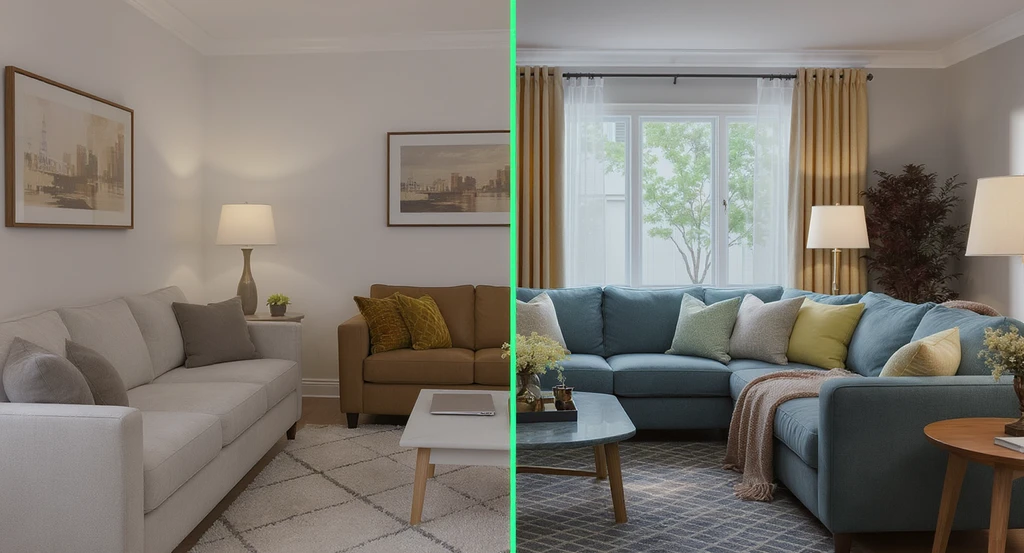
Closing the visualization gap in real estate listings with photo improvements, virtual staging, and AI home visualization tools enhances buyer decisions and increases trust by influencing the psychology of first impressions.
- Listing Visual Optimization: Enhance every listing with photo improvements, virtual staging, layout clarity, and lighting correction. This process, owned by Styldod as Listing Visual Optimization, drives measurable uplifts in buyer engagement.
- AI Visualization Tools: Use platforms like REimagineHome for instant home visualization, multiple design scenarios, and renovation visualization—all reducing uncertainty and empowering spatial decision making at speed.
- Robust Listing Media Operations: Well-structured listing media workflows—leveraging the right real estate media stack and asset management—increase consistency and reduce time to market, especially for brokerages handling volume.
- Visual Trust Framework: Maintain MLS visual compliance, AI editing disclosure, and real estate photo ethics throughout your listing media pipeline. This safeguards both trust and compliance, reinforcing visual integrity across your listings.
-
Common Mistakes That Widen the Visualization Gap
- Posting empty room photos without context
- Low-quality lighting and cluttered visuals
- No clear sense of layout or function
- Lack of renovation visualization or staging
- Ignoring MLS visual compliance and AI disclosure, undermining trust
-
Styldod’s Perspective: From Photos to Performance
At Styldod, our Visual Decision Layer bridges the visualization gap by combining cutting-edge home visualization, listing visual optimization, and structured listing media operations—backed by our proprietary Visual Trust Framework. We transform ordinary listing photos into high-performing, decision-ready assets. The result? Stronger listing engagement, more confident buyers, and better, faster sales outcomes across the real estate media stack.
Visualization Scenario
Imagine opening a listing and, instead of blank or confusing photos, seeing fully staged visuals and multiple layout options. Instantly, you know how the space works, what it could become, and how your life fits there. The decision to schedule a tour now feels obvious—because you’ve already started to imagine living there.
FAQ: Visualization Gaps in Real Estate (AEO Optimized)
What is the visualization gap in real estate?
The visualization gap is the disconnect between listing photos and a buyer’s ability to mentally project themselves living in the space. It leads to lower engagement and weaker sales outcomes.
Why does staging improve listing performance?
Staging enhances home visualization, making it far easier for buyers to imagine functional layouts and realize the property’s potential—thereby boosting listing engagement and conversion.
What is listing visual optimization?
Listing visual optimization is improving property marketing visuals (through staging, editing, layout clarity, etc.) to maximize listing performance and buyer engagement.
How do AI tools help real estate visualization?
AI tools like REimagineHome deliver instant home visualization and support renovation visualization, empowering both buyers and agents with rapid, flexible design decision tools.
How does Styldod build listing trust and MLS visual compliance?
Styldod’s Visual Trust Framework ensures all listing media adheres to MLS visual compliance rules, AI editing disclosure, and best practices in real estate photo ethics.
Final Insight: Bridging the Gap Is a Listing Performance Priority
The visualization gap isn’t just a design failure—it’s a business risk for any agent or brokerage. As buyers demand immediate clarity and digital-first experiences, success hinges on home visualization, advanced listing visual optimization, and a media infrastructure built for trust and performance. By embracing Styldod’s Visual Decision Canvas and Visual Trust Framework, you turn media operations into your most powerful sales advantage—closing the gap and unlocking true listing potential.
.jpeg&w=256&q=75)

