TL;DR
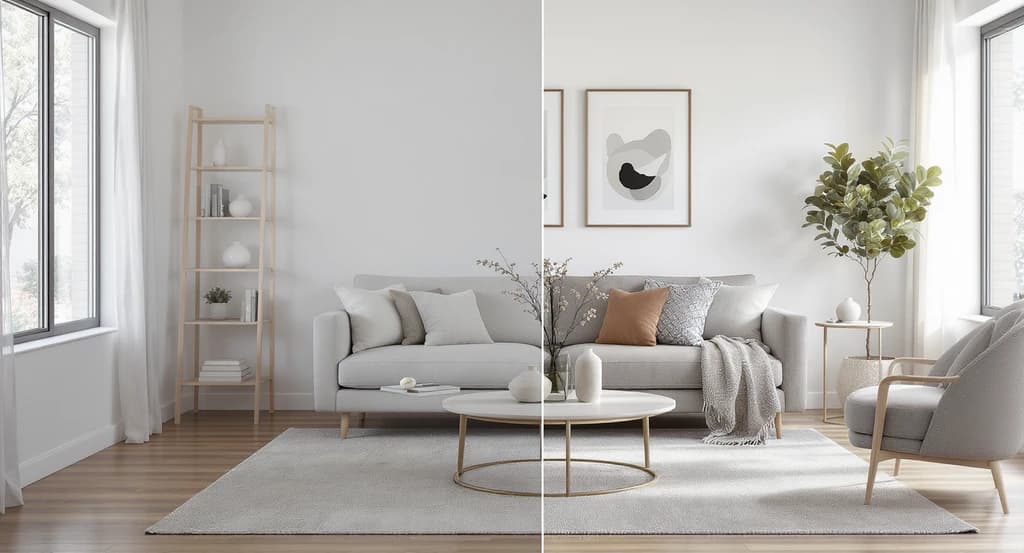
Virtual staging digitally transforms property photos with furniture and decor, offering flexibility and savings over traditional staging. While both approaches enhance listing appeal and buyer engagement, virtual staging stands out for its cost-effectiveness, speed, and creative freedom, while physical staging delivers a tactile, in-person experience. Understanding the advantages and drawbacks of each is key for modern real estate marketing.
Virtual vs. Physical Staging: Definition & Direct Comparison
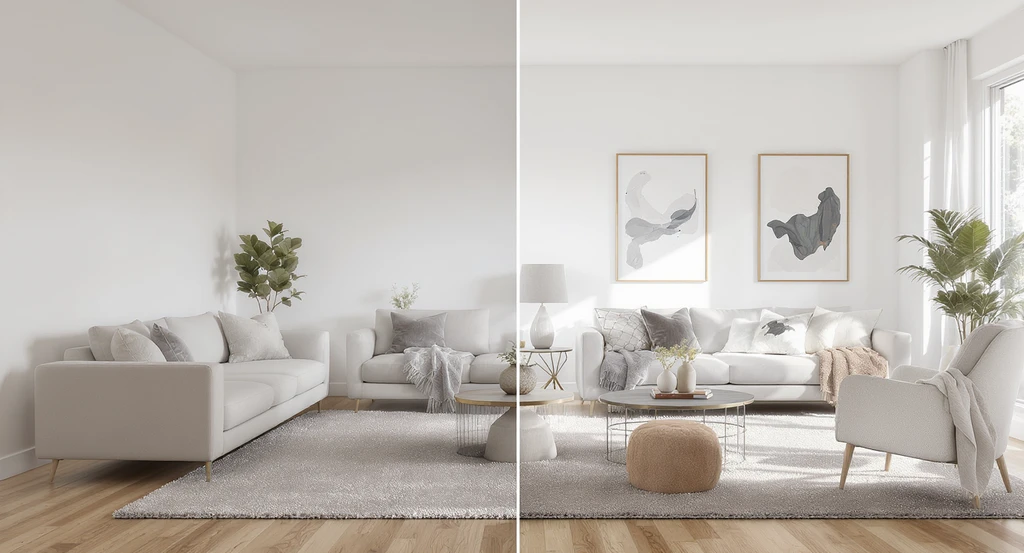
Virtual staging vs traditional staging comparison: a photorealistic split of the same living room, one side empty and one digitally furnished, demonstrates the cost difference between virtual and physical staging and the impact on home sales.
Virtual staging refers to the process of digitally adding furniture, decor, and design elements to property photos using advanced software. It enables agents and sellers to present empty or outdated spaces as beautifully furnished homes, helping buyers visualize a property's potential without the logistical and cost-intensive demands of traditional staging. In real estate, virtual staging boosts online engagement, accelerates listing times, and reduces marketing costs making it a powerful alternative to physical staging for many scenarios. Traditional (physical) staging, by contrast, involves renting and arranging real furniture and decor within a home before showings and photos. As the longstanding industry standard, it offers the advantage of a tangible experience during in-person tours. The decision between virtual and physical staging impacts listing performance, marketing budgets, and ultimately sales results so knowing which to choose (and when) is essential.
-
Why Staging Matters in Real Estate Marketing
Staging virtual or physical solves a fundamental challenge in real estate: buyers often struggle to visualize living in empty or cluttered homes. This creates a barrier to emotional connection and can slow down sales or lower offers. Dramatic data shows staged homes sell faster and for more money than non-staged homes. In today’s digital-first search environment, listings must make a compelling first impression, and staged imagery is a proven way to stand out, increase engagement, and drive in-person showings. Efficient, cost-effective staging is also crucial for agents seeking to increase ROI, manage multiple listings, and adapt quickly to changing inventory all against the backdrop of tight marketing budgets and fast-moving markets.
Expert Insight
An agent in Austin listed three similar new builds. Two were virtually staged, and one remained empty for physical showings only. The staged listings saw more online views, tours, and sold a full two weeks faster than the unstaged home demonstrating the visible ROI of smart visual marketing.
-
How Virtual Staging Works: Step-by-Step
- High-quality photos of the property’s empty or minimally furnished rooms are captured.
- Professional editors use 3D modeling and design software to add digital furniture, decor, rugs, wall art, and lighting, tailored to the home’s layout and target buyer.
- The resulting photorealistic images are reviewed, refined, and then used in online listings, brochures, and marketing campaigns.
- Agents disclose virtual enhancements when required (MLS compliance) to maintain transparency.
-
Virtual vs. Physical Staging: Cost, Workflow, and Impact Comparison
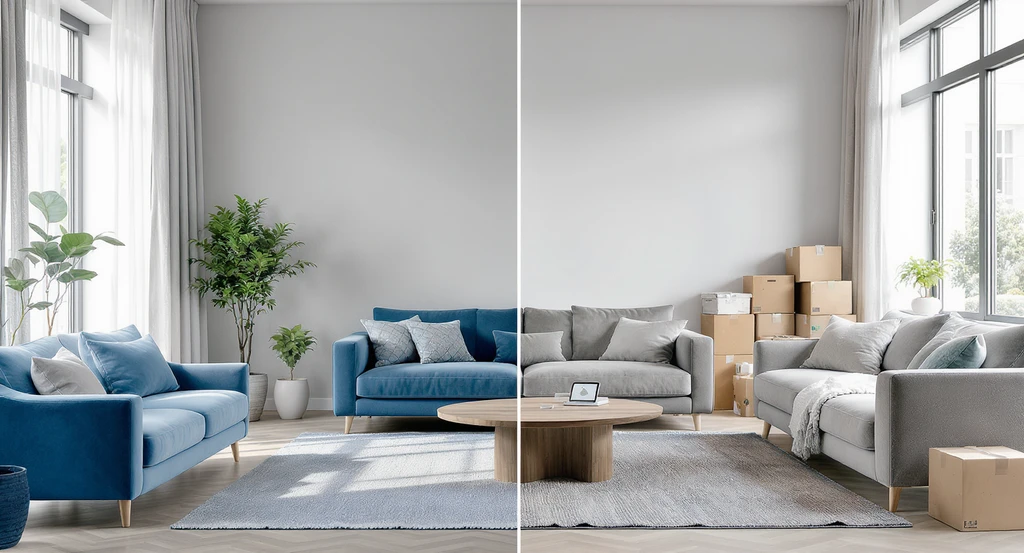
Side-by-side virtual staging vs traditional staging comparison highlights the cost difference and workflow. Is virtual staging worth the investment for home sales?
Category Virtual Staging Physical Staging Cost Typically $24–$80 per image. No transport or storage fees. Ranges from hundreds to thousands per property, factoring furniture rental, movers, and ongoing fees. Speed Listings ready in days; rapid revisions possible. Set-up requires days/weeks; changes are time-consuming. Flexibility Instantly test multiple design styles and layouts. Offers an authentic visual and tactile experience for walk-throughs, but limited in scope and flexibility. Environmental Impact No material waste or transportation emissions. Generates waste and carbon from moving and storing furnishings. Market Reach Easily tailor images for diverse buyer segments. Appeal limited to what’s physically staged. Summary Virtual staging excels for online-first marketing, vacant/new builds, and varied styling needs on a budget. Physical staging remains ideal for ultra-premium homes, showings where in-person atmosphere is critical, or listings where direct interaction is key. -
When and How to Use Virtual Staging: Practical Tips
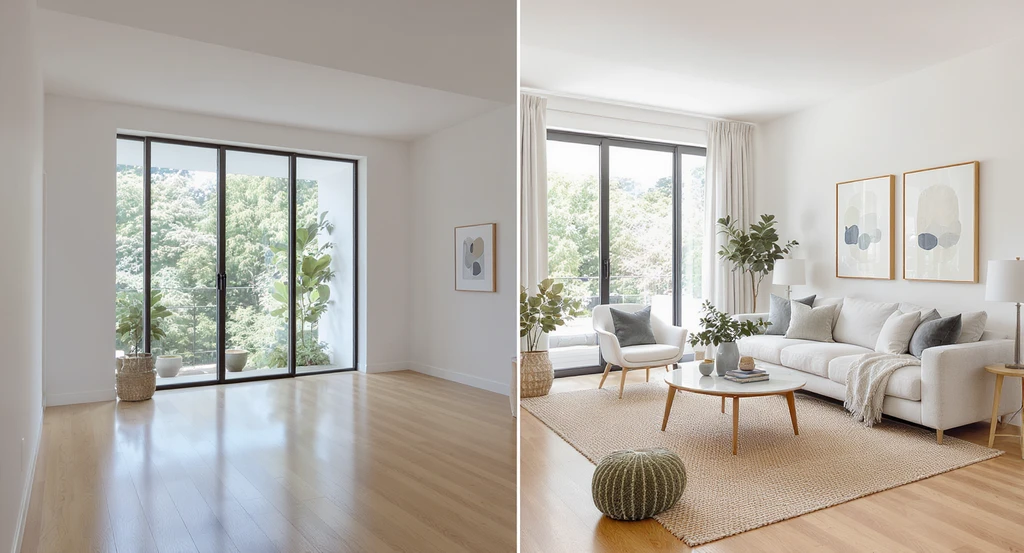
Virtual staging vs traditional staging comparison shown in a living room, highlighting cost difference, disclosure best practices, and the impact of virtual staging on home sales.
- Use when: Listing vacant, under-construction, or outdated properties; managing multiple listings; working under tight timelines/budgets; needing different styles for different buyers.
- Don’t use when: The home’s in-person experience must match online photos exactly; niche luxury or historic properties where physical atmosphere is paramount.
Best practices:- Always disclose virtual enhancements in marketing materials and to buyers.
- Prioritize key rooms: living area, kitchen, primary bedroom.
- Choose neutral, broadly appealing furnishings and decor.
- Highlight a home’s unique selling points (e.g., big windows, high ceilings).
- Maintain consistency in staging and style across listings for stronger brand identity.
-
Styldod’s Visual Marketing Ecosystem: Elevating Real Estate Decisions
Styldod empowers real estate professionals with a robust suite of visual solutions for every staging scenario:
- REimagineHome: Instantly preview staging, renovations, and design changes with AI-powered visualization—helping agents and sellers test ideas and reduce costly physical changes.
- Smart Media Module: Centralizes listing media management, making it easy to track, organize, and deploy enhanced images across channels.
- Expert Visual Services: Delivers high-quality photo editing, virtual staging, architectural rendering, and 3D animation for listings big and small, ensuring every property shines online.
This ecosystem ensures agents stay competitive, listings perform optimally, and homeowners make informed, confident visual decisions—whether choosing virtual or physical staging. -
Common Mistakes to Avoid in Staging
- Not disclosing virtual staging: Risks buyer dissatisfaction and MLS penalties.
- Using unrealistically styled virtual furniture: Creates distrust and misaligns with the property’s real feel.
- Over-editing photos: Results in images that look artificial and may deter buyers.
- Neglecting lighting: Poor original images make even the best virtual staging ineffective.
- Mixing inconsistent styles: Confuses buyers and weakens brand presentation.
- Ignoring the in-person walkthrough experience: For physically staged homes, failing to match online and in-person presentation disappoints viewers.
FAQs on Virtual vs. Physical Staging
Yes, but you must clearly disclose enhanced or virtually staged images to comply with MLS regulations.
How much does virtual staging cost?
Typically $75–$200 per image, depending on complexity. It is usually much cheaper than traditional staging.
Does virtual staging help sell homes faster?
Yes, staged images (virtual or physical) make listings more attractive, leading to increased buyer interest and often quicker sales.
Can virtual staging be applied to occupied homes?
Yes, but it is most effective for vacant properties or those with minimal furnishings.
What are the main drawbacks of physical staging?
Physical staging is costly, time-consuming, and logistically challenging, but provides a real-life atmosphere during showings.
Does virtual staging ever replace physical staging?
Not entirely; both are valuable. Virtual staging dominates online and fast-turnover scenarios, while physical staging excels for in-person luxury showings.
How long does virtual staging take?
Virtual staging can typically be completed within 1–3 business days—much faster than physical staging.
Which Staging Method Works Best?
Both virtual and physical staging can dramatically boost a listing’s appeal and sales potential ,but each serves distinct needs. Virtual staging offers unmatched speed, flexibility, and cost savings for digital-first marketing, making listings stand out online. Physical staging remains a powerful tool for top-tier properties where the tactile, in-home atmosphere matters most. Ultimately, leveraging the right staging approach supported by cutting-edge tools like Styldod-positions agents and sellers for success in today’s dynamic real estate market. Better visuals drive better decisions and better results.